
Jaishankar also emphasised the need for ensuring that Kabul's neighbours are not "threatened by terrorism, separatism and extremism".
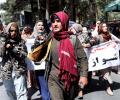
Mullah Muhammad Hassan Akhund is appointed as Prime Minister with two deputies Mullah Abdul Ghani Baradar and Molavi Abdul Salam Hanafi.

Specially designated global terrorist Sirajuddin Haqqani, who carries a reward of $10 million US bounty on his head, is the acting interior minister while his uncle -- Khalil Haqqani -- has been named as acting minister for refugees.


Afghanistan witnessed a series of terror attacks in the last few weeks as the US aimed to complete the withdrawal of its forces from Afghanistan by August-end, ending a nearly two-decade of its military presence in the war-ravaged country.

Seven terror convicts were hanged on Tuesday in jails across Pakistan, including a junior technician at Pakistan Air Force who was involved in the attack on former military ruler Pervez Musharraf.

India ended an utterly forgettable tour of New Zealand by drawing the second and final Test at the Basin Reserve (Wellington) on Tuesday. Captain Brendon McCullum became the first New Zealand batsman to hit a triple century, a knock that helped stage an incredible turnaround that ensured his team a memorable series win.
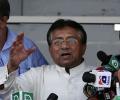
A Pakistani court on Thursday rejected an appeal against the formation of a special court to try former military ruler Pervez Musharraf on a charge of high treason.

In a significant policy statement on the Taliban which is making big gains in its offensive in Afghanistan, China has asked it to make a "clean break" from all terrorist forces, especially the Al Qaida-backed Uyghur Muslim militant group ETIM fighting for the volatile Xinjiang province's independence.

The latest admission appears to be a u-turn by the government, which in the past, has maintained that the underworld don lives in Pakistan.

Walee Bukhatir and Mazhar Khan, the men who drive cricket in the UAE, tell Harish Kotian/Rediff.com what the game is missing by India and Pakistan not playing at the Sharjah Cricket Stadium.

The eighth edition of the Indian Premier League, says Haresh Pandya, provides Yuvraj Singh a chance to make up for time lost and opportunities missed or squandered.

Ali Haider Gilani, son of ex-premier Gilani, has been recovered from Afghanistan's Ghazni province, Pakistan's Foreign Office said in a statement.
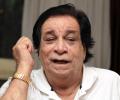
Folk artist from Chhattisgarh Teejan Bai, Guelleh, Naik and theatre actor from Maharashtra Balwant Moreshwar Purandare will be honoured with Padma Vibushan.

Any subject is good enough for producing good art. Piku, and its obsession with 'emotion resulting from motion' is a perfect example, says Mohammad Asim Siddiqui.

India's majoritarian regime is now making a dangerously fast-paced move towards theocracy, like its western counterpart did a few decades ago, warns Mohammad Sajjad.

The Afghan deputy foreign minister explains how his nation's President became disillusioned with Pakistan. Ajai Shukla listens in.

'This is not the handiwork of ordinary sub inspectors and constables.' 'If the police claim there was a scuffle between them and these five men, then how come none of the policemen were killed, or even hit by a bullet?'

'Afghanistan cannot be at peace until the Pashtuns regain their pre-eminent role in the country's governance,' says Ambassador M K Bhadrakumar.

Support for the dreaded Haqqani network across the militant group's historical stronghold in eastern Afghanistan is gradually turning into "resentment" as local leaders say the Haqqani supremo's war is for "Pakistani rupees and power" and they cannot follow him "blindly".
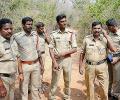
'If 25 black men had been executed illegally in the US in one day, the government would have fallen and the population would have rallied to the victims. In India, those of us who did not applaud the police only yawned,' says Aakar Patel.
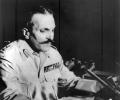
29 years ago this August, Pakistan's dictator, the general who made jihad part of Pakistani State policy, died in a mysterious air crash. Did the KGB, the then USSR's dreaded espionage agency, assassinate Zia-ul Haq? Was India's RA&W responsible for blowing Zia's military aircraft out of the skies? Was it Zia's many enemies in Pakistan's military? Was it a box of mangoes as Mohammad Hanif speculated in his fascinating novel about Zia's death? Or was the assassin someone else?
29 years ago this August, Pakistan's dictator, the general who made jihad part of Pakistani State policy, died in a mysterious air crash. Did the KGB, the then USSR's dreaded espionage agency, assassinate Zia-ul Haq? Was India's RA&W responsible for blowing Zia's military aircraft out of the skies? Was it Zia's many enemies in Pakistan's military? Was it a box of mangoes as Mohammad Hanif speculated in his fascinating novel about Zia's death? Or was the assassin someone else?
29 years ago this August, Pakistan's dictator, the general who made jihad part of Pakistani State policy, died in a mysterious air crash. Did the KGB, the then USSR's dreaded espionage agency, assassinate Zia-ul Haq? Was India's RA&W responsible for blowing Zia's military aircraft out of the skies? Was it Zia's many enemies in Pakistan's military? Was it a box of mangoes as Mohammad Hanif speculated in his fascinating novel about Zia's death? Or was the assassin someone else?

The US and its allies must evolve a more comprehensive long-term plan to defeat the new danger that the caliphate poses to the world order. And India too must do its bit for course correction, says strategic expert Gurmeet Kanwal.
